WhatsApp
 WhatsApp Integration
Connect a Cavuer AI agent to WhatsApp and automate customer communication 24/7.
 Quick Start
Get your agent up and running in three steps.
Step 1 — Create an Agent in Cavuer
An agent is an AI profile that manages your channels. You can connect multiple channels to a single agent.
- Sign up at console.cavuer.com
-
On the main page, click "Create Agent", enter a name and select a language model
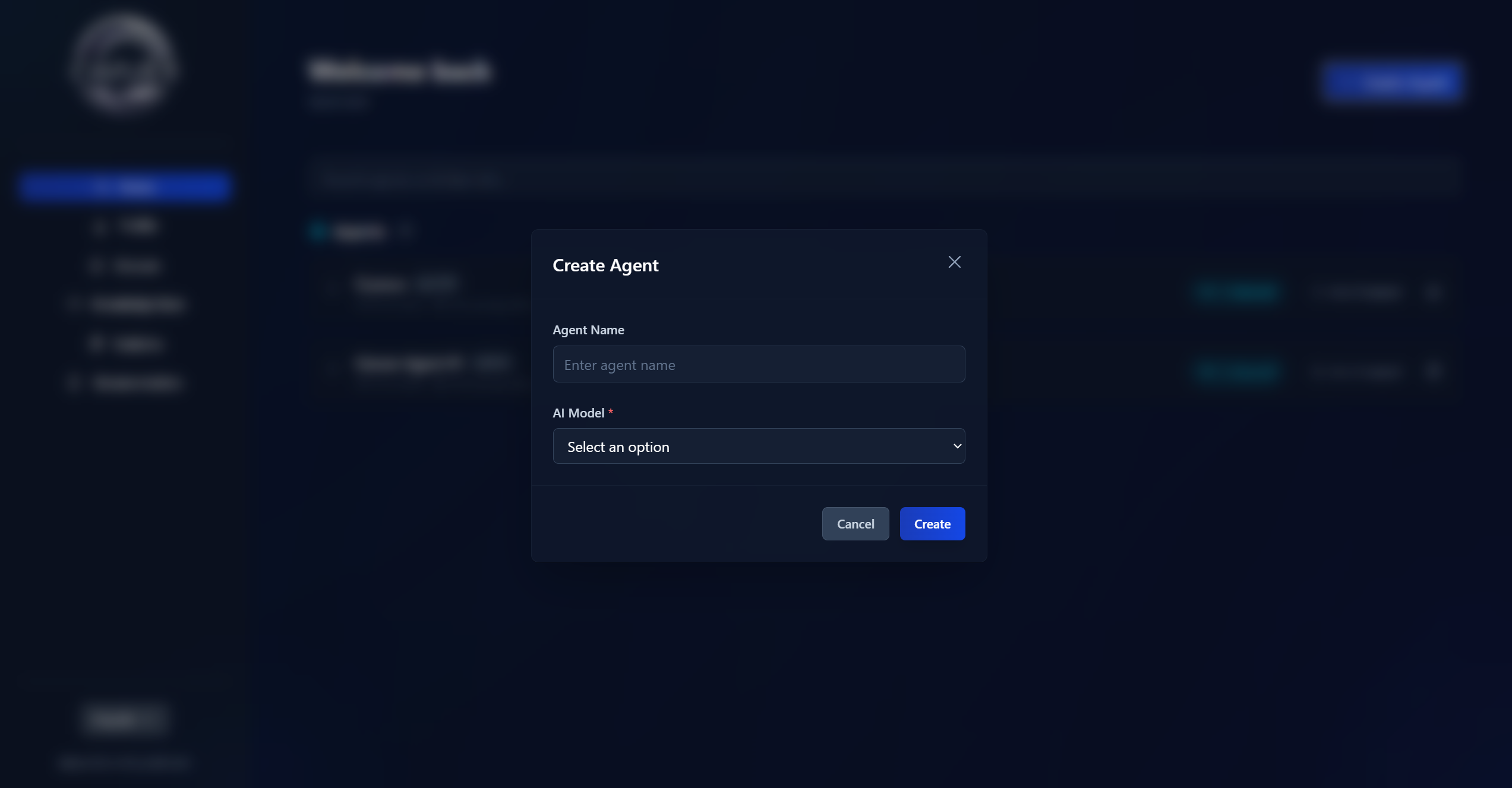
-
After creating the agent, open its settings and add an instruction — rules for how the agent should interact with customers
Instruction Example
You are a polite support assistant for "MyCompany".
Always address the customer by name.
Only answer questions related to our services.
If you don't know the answer — suggest contacting a live operator.
Choosing a Language Model
Each model differs in speed, accuracy, and cost. For most support tasks, GPT-4 and Claude Haiku models work great. For complex analytical tasks, consider GPT-5, Claude Sonnet, or Claude Opus models.
Step 2 — Connect the WhatsApp Channel
-
On the main page, click "Add Channel" next to your agent and select WhatsApp
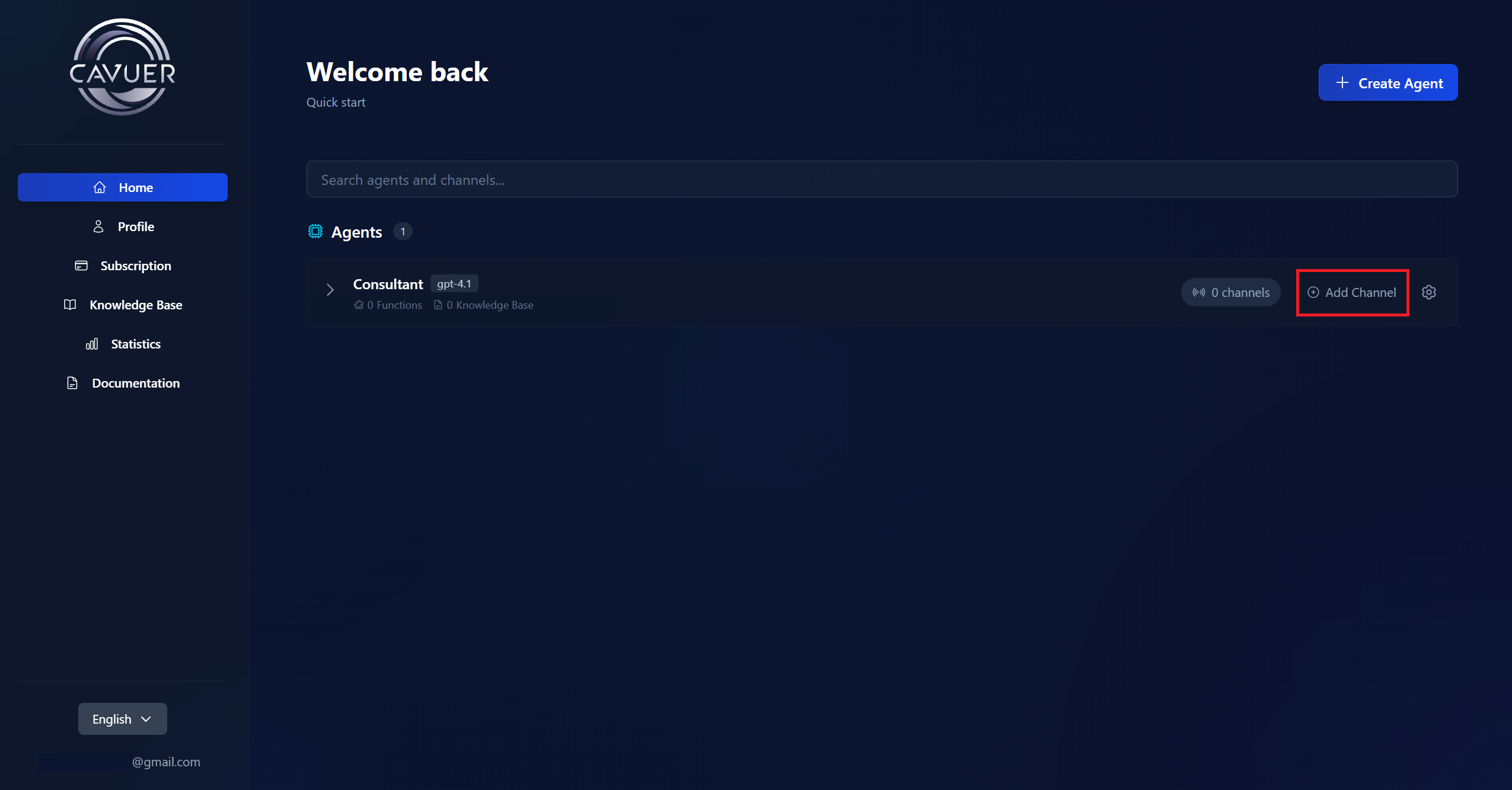
-
Wait for the channel to initialize — the process may take up to 5 minutes. The status will change from "Initialization" to "Stopped"
Step 3 — Enable the Channel and Start
- Go to the channel settings
-
Click "Authorize" and follow the instructions:
- Enter the phone number of your WhatsApp account
- Confirm the connection via the pop-up notification in the WhatsApp app on your phone
- Enter the verification code
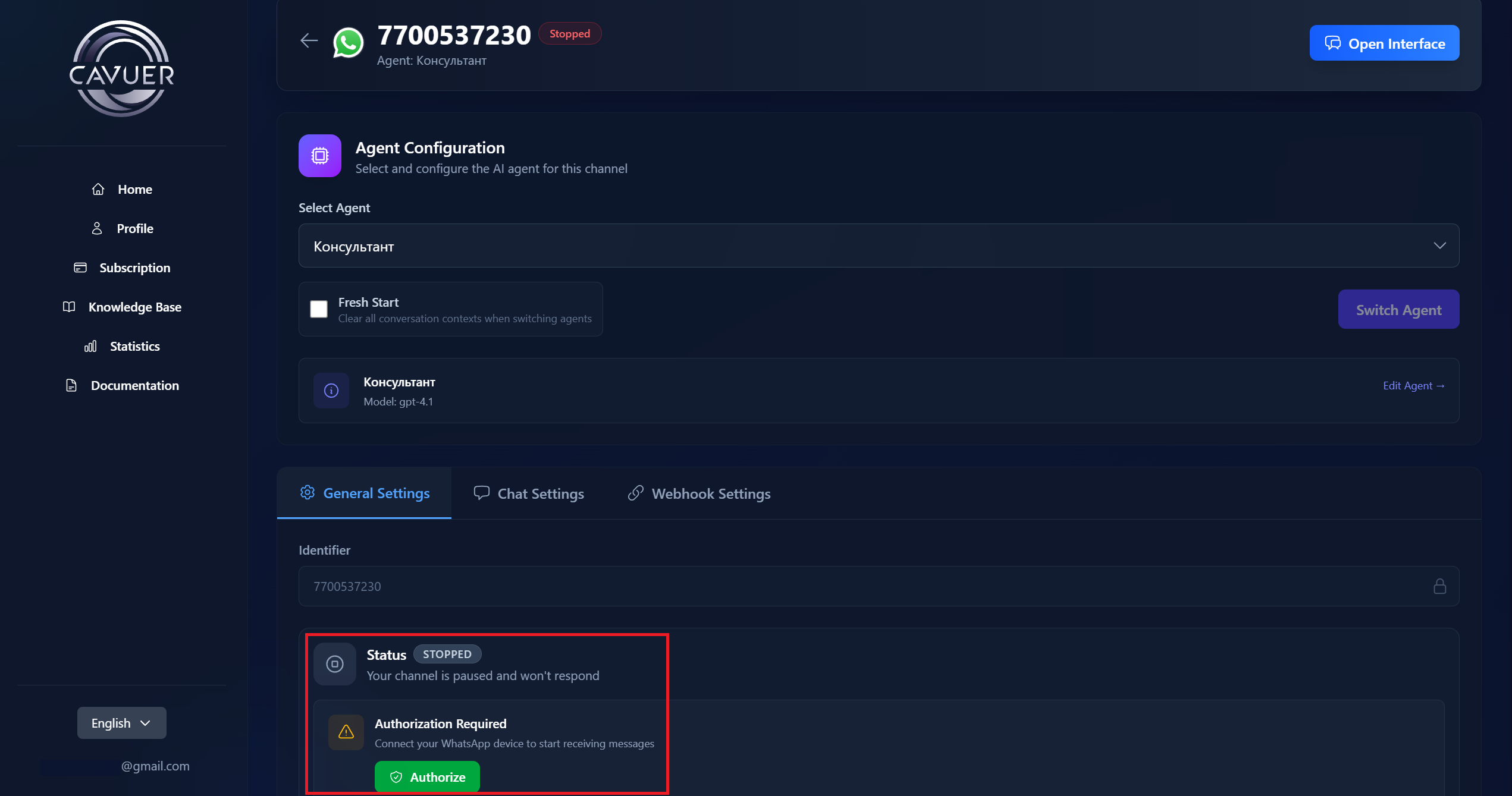
How Authorization Works
WhatsApp connection works similarly to signing in to WhatsApp Web. Your phone with the WhatsApp account must be turned on and connected to the internet. After authorization, the agent gains access to incoming messages through the linked phone number — just like WhatsApp Web.
Pricing Note
The WhatsApp integration includes a minimum daily fee. Learn more on the pricing page.
 Done! Your AI agent is created, configured, and running. All incoming WhatsApp messages will be processed automatically based on the agent's instructions and knowledge base.
 Advanced Setup
Agent Settings in Cavuer Dashboard
Configure the agent's behavior at console.cavuer.com:
| Parameter | Description |
|---|---|
| Name | Rename the agent and channel for easier management in the Cavuer dashboard |
| Model | Select a language model |
| Instruction | Agent behavior rules: greeting, company description, operator transfer conditions, language settings. Specify whether the agent should respond in the customer's language or only in a specific language |
| Response Delay | Delay before responding. Useful when customers send multiple messages in a row — the agent will wait and process all messages together |
| Process Images | Allows the agent to view and analyze image content |
| Process Audio | Enables the agent to recognize voice messages |
| Knowledge Base | Upload .txt, .pdf, or .docx files and connect them in the agent settings |
Full parameter reference: Agent and Channel Setup
Knowledge Base Setup
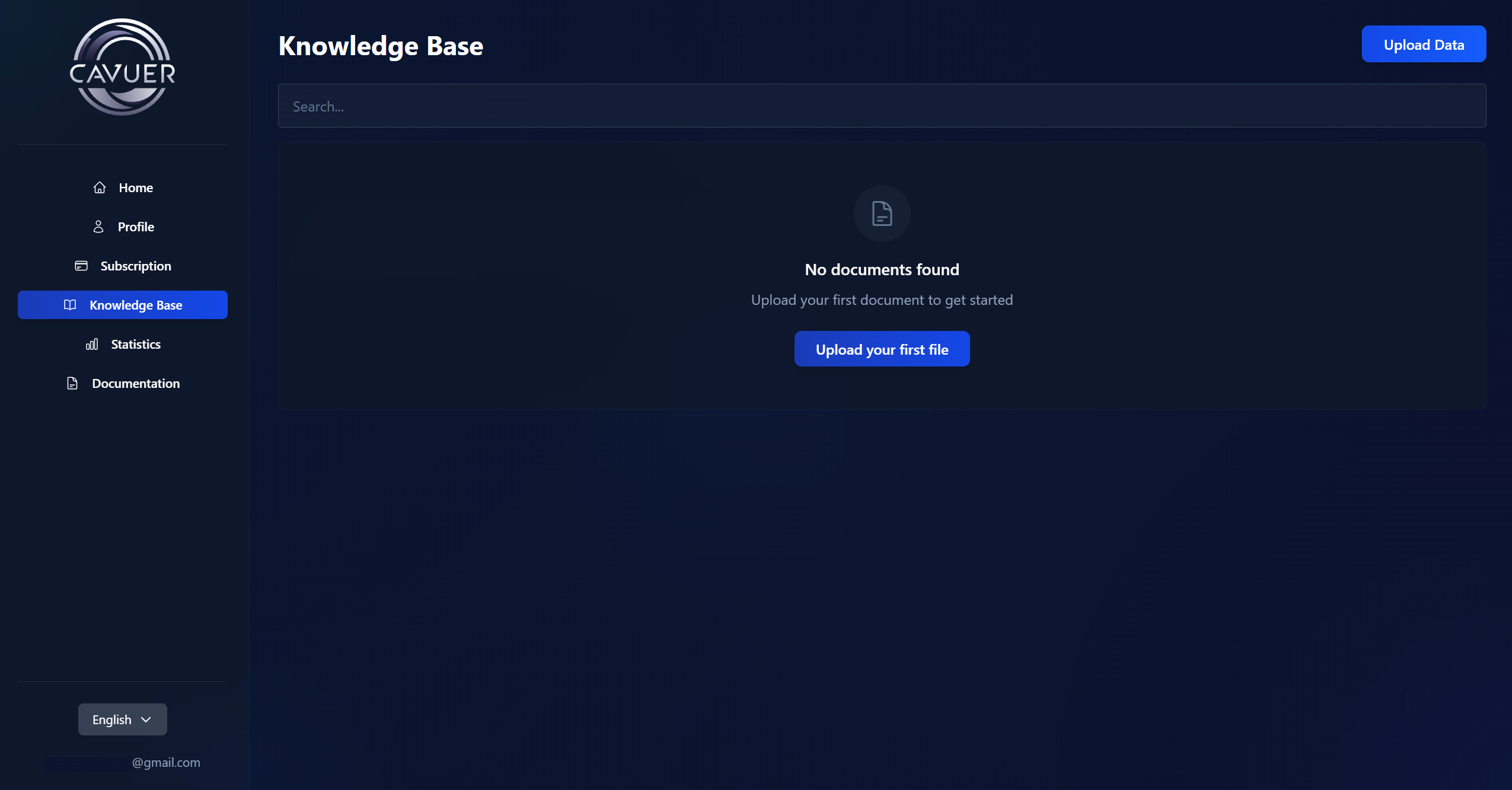
The Knowledge Base is the agent's source of information. There are two ways to populate it:
1. Uploading individual articles. Go to the Knowledge Base section → click "Upload Data" → on the "File" or "Text" tab, enter a title and add the content (.pdf, .docx, .txt files or plain text).
2. Creating collections. Click "Collections" → "Add Collection" and choose a source type: Website, Yandex Wiki, or Confluence. Cavuer will automatically crawl and index the pages.
Then, in the agent settings under Knowledge Base, click "Link Data", select the required articles or collections, and save your changes. For more details, see Knowledge Base.
Knowledge Base Best Practices
- Break up large texts — create smaller articles for specific topics (e.g. separate articles for "Delivery", "Payment", "Returns")
- When editing, use the "Replace Source" function — simple text edits don't update the search index
- Remove unnecessary pages from collections — this improves the accuracy of relevant information retrieval
- Link to documentation — upload a brief summary and include a link to the full version
Usage in Groups
The agent can work not only in direct messages but also in WhatsApp group chats. Learn more: Usage in Groups.
Need Help?
If you have any questions about setting up your agent or connecting a WhatsApp channel, please contact our support team.